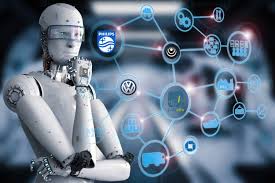
Transforming the Future with Cutting-Edge Innovations
In the ever-evolving world of innovation, the rapid advancement of new technologies is shaping the way we live, work, and interact. From artificial intelligence (AI) to quantum computing, these breakthroughs are not only driving economic growth but also redefining industries, making tasks easier, and opening up new possibilities for the future. As we continue to embrace new solutions, the potential for change and progress is limitless. In this article, we will explore some of the most exciting developments in the field and how they are transforming the future.
The Rise of Artificial Intelligence
Artificial intelligence is at the forefront of technological advancements, and its applications are revolutionizing a wide range of industries. AI is a branch of computer science that focuses on creating machines capable of performing tasks that would normally require human intelligence. From voice assistants like Siri and Alexa to self-driving cars, AI is reshaping our daily lives.
In business, AI is used to enhance customer service through chatbots, automate data analysis, and streamline operations. Healthcare is also benefiting from AI, as it helps doctors with diagnosis, drug discovery, and personalized medicine. In finance, AI algorithms are transforming trading strategies, fraud detection, and risk management.
As AI continues to advance, it will enable even more sophisticated applications, such as the development of emotional intelligence in machines and fully autonomous systems that can function with minimal human intervention.
The Power of 5G Connectivity
The rollout of 5G networks is set to bring about significant improvements in the speed and reliability of mobile internet. As the fifth generation of wireless technology, 5G is designed to offer faster download and upload speeds, lower latency, and more stable connections. This will have a profound impact on everything from mobile communications to the Internet of Things (IoT).
With 5G, industries such as healthcare, entertainment, and transportation will experience transformative changes. For example, telemedicine will become more effective, with faster video consultations and remote surgeries becoming a reality. In the entertainment sector, 5G will enable smooth streaming of high-definition and 4K content without buffering. For transportation, autonomous vehicles will rely on 5G networks to communicate with each other and with infrastructure, ensuring safety and efficiency on the roads.
Additionally, the expansion of 5G will foster the growth of smart cities, where connected devices and sensors will improve urban planning, traffic management, and energy efficiency.
Blockchain and Its Disruptive Potential
Blockchain technology, most commonly associated with cryptocurrencies like Bitcoin, is making waves in industries beyond finance. Essentially, a blockchain is a decentralized digital ledger that records transactions across many computers, ensuring that the data cannot be altered retroactively without the consensus of the network. This makes blockchain a highly secure and transparent technology.
Beyond cryptocurrencies, blockchain is finding applications in supply chain management, voting systems, healthcare, and more. By providing secure, immutable records, blockchain can enhance transparency, reduce fraud, and improve efficiency. For example, in supply chain management, blockchain can track the origin and movement of goods in real-time, ensuring authenticity and reducing the risk of counterfeit products.
In healthcare, blockchain could be used to securely store and share patient data, enabling seamless access to medical records while maintaining privacy and security.
Quantum Computing: A Leap Toward Unimaginable Power
Quantum computing is another breakthrough technology that has the potential to revolutionize industries. Unlike classical computers, which process information in binary (0s and 1s), quantum computers use quantum bits or qubits, which can exist in multiple states at once. This enables quantum computers to solve complex problems much faster than traditional computers.
While quantum computing is still in its early stages, it holds the promise of solving problems that are currently beyond the reach of classical computers. This includes simulating complex molecular interactions, optimizing supply chains, and cracking encryption codes. In healthcare, quantum computing could accelerate drug discovery by simulating the behavior of molecules more accurately than conventional methods.


